Blog
/

The race for crypto bank charters

Banks and crypto

The race for crypto bank charters

The following is by Mesh Counsel Damilola G. Arowolaju

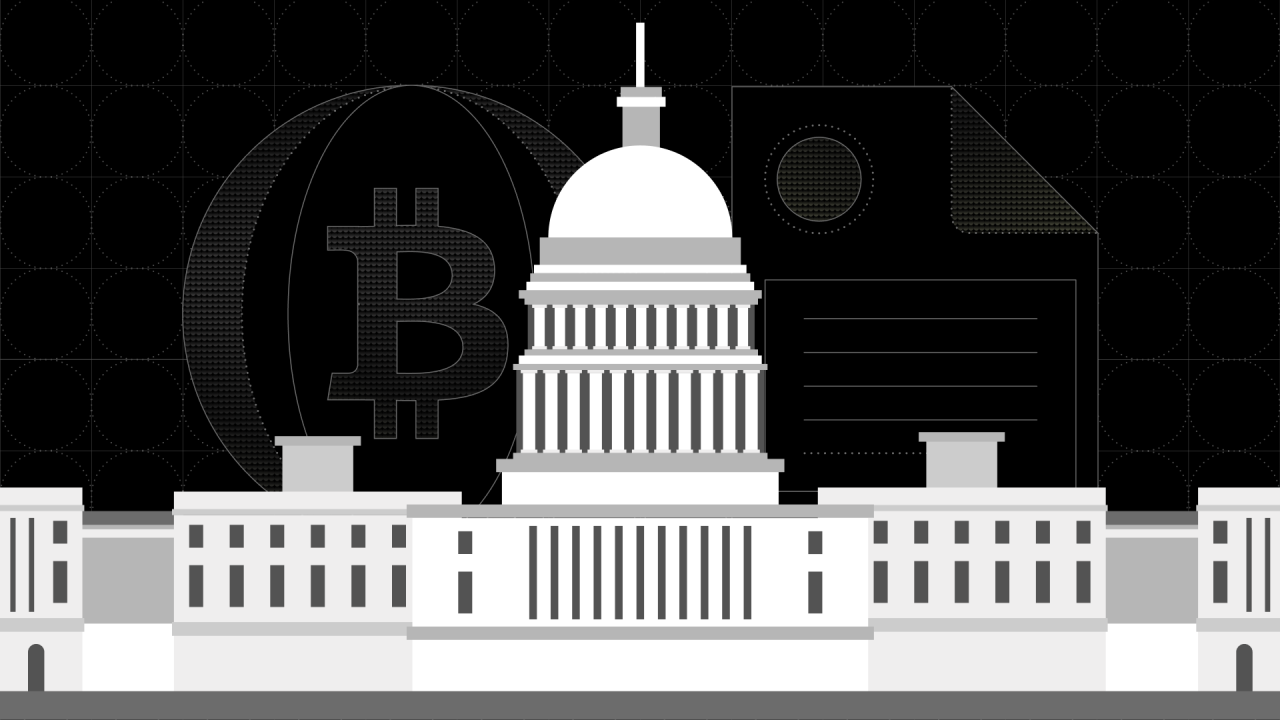
Stripe subsidiary Bridge’s conditional approval for a national trust bank (NTB) charter is another data point in a larger strategic shift: crypto firms are no longer content to rent financial infrastructure. They’re trying to own it.

Once finalized, the Office of the Comptroller of the Currency’s (OCC) conditional approval would allow Bridge to custody digital assets, manage stablecoin reserves, and operate under direct federal supervision. Similar approvals for Circle, Ripple, Paxos, BitGo, and Fidelity Digital Assets suggest a pattern: federal bank charters are becoming part of the crypto playbook.

In this article, I unpack the strategic logic behind the NTB rush.

What an NTB is (and isn’t)

A national trust bank is not a full-service commercial bank. It generally cannot accept FDIC-insured deposits, it does not automatically gain access to Federal Reserve payment systems, and it does not come with turnkey operational readiness.

What it does provide is federal prudential oversight and the ability to operate in fiduciary capacities: custody, reserve management, and certain banking-adjacent activities under the OCC’s “incidental powers” doctrine (over the past five years, the OCC has interpreted those powers to include crypto custody, stablecoin reserve management, node participation, and even riskless principal execution of crypto).

For a stablecoin issuer or custody provider, an NTB charter is meaningful. It allows core activities to sit inside the “business of banking” rather than in the more precarious territory of state money transmitter licenses.

Vertical integration

The NTB charter can be seen as a bet on vertical integration: a specific vision of the future payment stack where crypto and fiat rails converge.

In a fully realized model, a crypto firm could:

  • Issue stablecoins
  • Manage its own reserves
  • Custody digital assets
  • Execute trades as intermediary
  • Settle payments over Fedwire or the FedNow real-time payments network (if granted access)

That’s what a vertically-integrated payment stack looks like: it’s crypto and fiat rails under one regulatory umbrella.

The long-term thesis is straightforward: firms that are vertically integrated would have structural advantages over those that rely on banking partners and third-party custodians.

But the near-term reality is more complicated.

The costs

An NTB charter doesn’t eliminate regulatory burden–it increases it.

Capital requirements are significant and may exceed eight figures depending on the activity profile. Liquidity management is structurally harder without deposit funding. Bank-level compliance is materially more demanding than money services business obligations.

And most critically: a Federal Reserve master account (or even the proposed “skinny” master account) is not guaranteed. The charter is necessary for direct rail access, but it is not sufficient.

For firms pursuing the charter primarily to access Fed payment systems, the risk is clear: the compliance buildout begins immediately, while access to payment rails remains uncertain.

Why firms are doing it anyway

The appeal of the charter becomes clearer when you look at the structural advantages:

Regulatory consolidation

A federal charter reduces reliance on a patchwork of state money transmitter regimes and may preempt future state-level crypto frameworks.

Institutional signaling

An OCC charter carries weight with pension funds, corporates, and sovereign institutions. For firms targeting institutional flows, that mandate matters.

Stablecoin reserve control

Under the GENIUS Act, issuers may manage reserves “consistent with State and Federal law.” An NTB provides a clear pathway to do so directly, rather than through third-party banking arrangements.


For large, well-capitalized stablecoin issuers, these advantages are compelling enough to pursue a charter. For smaller firms, the capital drag and supervisory intensity may outweigh the benefits.

Closing thoughts

Bridge’s conditional approval reinforces a broader trend: the maturation of crypto from speculative asset class to payment infrastructure.

The firms applying for NTB charters are positioning themselves for a future where fiat and crypto rails converge into a single settlement layer. Owning the regulatory stack is one way to future-proof that model.

But it is a long-term infrastructure investment, not a short-term growth hack. The firms most likely to succeed under this model will have sufficient capitalization, institutional-grade compliance infrastructure, and a credible path to payment rail access, with or without Federal Reserve approval.

Everyone else may find that the charter isn’t worth the cost.

Want more like this? Subscribe to Mesh Weekly.

Related posts

Making Mesh work at scale
March 28, 2026
What it takes to make Mesh work at scale
business of delay
March 21, 2026
The business of delay
Demystifying the Travel Rule for crypto and stablecoins
March 19, 2026
Demystifying the Travel Rule for crypto and stablecoins
What We’re Building
March 14, 2026
What We’re Building | March 2026
Word salad
March 7, 2026
Is crypto's word salad freezing innovation?
Multiple platforms
February 28, 2026
Can't read, won't buy
Dials
February 14, 2026
The AI revolution needs programmable money
Crypto regulation
February 7, 2026
5 regulatory trends to watch in Q1
Mesh logo
January 31, 2026
A note from our CEO
Mesh Raises $75M Series C at $1B Valuation
January 27, 2026
Mesh Raises $75M Series C at $1B Valuation
On-chain loyalty
January 24, 2026
Let’s put loyalty points on-chain
Mesh building
January 17, 2026
What We’re Building | January 2026
Cross-chain bridging in action
January 12, 2026
LIVE: Cross-chain bridging!
Application security
January 5, 2026
The new rules of application security
2026
January 3, 2026
Our 2026 predictions
2025
December 20, 2025
2025: A year in review
Paxos x Mesh
December 15, 2025
Mesh Partners with Paxos
Liquidity
December 13, 2025
The future is liquid
Mesh building
December 5, 2025
What We’re Building | December 2025
Mesh x Coverd
December 5, 2025
Mesh Partners wth Coverd
UK flag
November 29, 2025
Inside the UK’s new stablecoin framework
User knowledge
November 22, 2025
How to build “deep” user knowledge
Crypto tokens
November 15, 2025
Savviness ≠ spending frequency
Mesh building
November 8, 2025
What We’re Building | November 2025
Crypto onboarding
November 1, 2025
Onboarding is the real conversion bottleneck
Regulations
October 25, 2025
5 regulatory trends to watch in Q4
Verification
October 18, 2025
AML/KYC is broken and crypto can fix it
Mesh building
October 11, 2025
What We’re Building | October 2025
Agentic payments
October 4, 2025
Where crypto and AI converge
Modern customer success
September 27, 2025
Customer success is dead
AI and crypto converging
September 20, 2025
Our two bold steps into the agentic age
Mesh is building
September 13, 2025
What We’re Building | September 2025
Crypto ecosystem
August 30, 2025
In defense of a crowded crypto ecosystem
Mesh engineering team
August 28, 2025
How to nail engineering onboarding
Puzzle piece
August 23, 2025
The missing piece to stablecoin adoption
Levl x Mesh
August 21, 2025
Mesh Partners with Levl
RedotPay x Mesh
August 13, 2025
Mesh Partners with RedotPay
Ripple x Mesh
August 12, 2025
Mesh Adds Support for Ripple USD (RLUSD)
Trump's crypto report
August 9, 2025
Trump’s giant crypto report summarized
August 4, 2025
Mesh Partners with AEON
Alchemy Pay x Mesh
August 1, 2025
Mesh Partners with Alchemy Pay
Indian flag
July 26, 2025
Mesh is expanding to India
Gabriele Galli at ETHMilan
July 19, 2025
Voices from the crypto circuit
Crypto wallet
July 12, 2025
Ignore Gen Z at your peril
Stablecoins used for corporate treasury management
July 5, 2025
Stablecoins are winning CFOs over
Stablecoins flowing
June 28, 2025
Accelerating finance with stablecoins
Mesh UX screens
June 21, 2025
How we build trust through UX design
Senate floor
June 18, 2025
The GENIUS Act in 5 numbers
Stablecoin Market Map
June 2, 2025
Stablecoin funding to surge $11.3B
Different types of stablecoins
May 28, 2025
How stablecoins will reshape corporate treasuries
Mesh CEO Bam Azizi on Fox News
May 20, 2025
Stablecoin bill clears major hurdle
Mesh Raises $82M Series B
March 11, 2025
Mesh Raises $82M to Build the Future of Crypto Payments
Shift4 + Mesh
October 28, 2024
Mesh Partners with Shift4 to Enable Seamless Crypto Payments
MetaMask and Mesh
October 22, 2024
Streamlining Crypto Onboarding
MetaMask and Mesh
September 17, 2024
Supercharging Crypto Management: Mesh Deposit Live in MetaMask Portfolio
Mesh Verify screen
August 7, 2024
Identity Verification
User attestation screens
August 1, 2024
User Attestation
Satoshi Test screen
July 30, 2024
Satoshi Test
Dark Theme Screens
July 27, 2024
Dark Theme
Mesh Verify Screen
July 22, 2024
Mesh Verify
Converts screen
July 8, 2024
Converts
Mesh Payout Screen
June 27, 2024
Mesh Payout
AI Innovation
May 14, 2024
Mesh Copilot
Mesh and MetaMask Institutional partnership image
April 30, 2024
Mesh and MetaMask Institutional: Engineering Next-Level Portfolio Management
Mesh Ramp Screen
April 29, 2024
Mesh Ramp
Mesh and MetaMask partnership image
April 16, 2024
Mesh and MetaMask: Revolutionizing Digital Asset Management Through Innovation
Mesh Pay Screen
April 1, 2024
Mesh Pay
Mesh Deposit screen
February 27, 2024
Mesh Deposit
Rabby Wallet
January 31, 2024
Does Rabby Wallet have an API?
f(x) Wallet
January 25, 2024
Does f(x) Wallet have an API?
Unstoppable Wallet
January 25, 2024
Does Unstoppable Wallet have an API?
Keyring Pro
January 25, 2024
Does Keyring Pro have an API?
Bitpanda Custody
January 25, 2024
Does Bitpanda Custody have an API?
Paraswap Wallet
January 25, 2024
Does ParaSwap Wallet have an API?
LATOKEN Multichain DeFi Wallet
January 25, 2024
Does LATOKEN Multichain DeFi Wallet have an API?
Loopring Wallet
January 25, 2024
Does Loopring Wallet have an API?
Hotcoin
January 25, 2024
Does Hotcoin Global have an API?
KyberSwap
January 25, 2024
Does KyberSwap have an API?
Rootstock
January 18, 2024
Does Rootstock have an API?
Huobi
January 18, 2024
Does Huobi have an API?
Poloniex
January 18, 2024
Does Poloniex API have an API?
Gate.io
January 18, 2024
Does Gate.io have an API?
Bitski
January 18, 2024
Does Bitski have an API?
Crossmint
January 18, 2024
Does Crossmint have an API?
OkCoin
January 18, 2024
Does OkCoin have an API?
January 18, 2024
Does CEX.IO have an API?
okx
January 18, 2024
Does Okx have an API?
WhiteBIT
January 12, 2024
Does WhiteBIT have an API?
1inch Wallet
January 12, 2024
Does 1inch Wallet have an API?
BitForex
January 12, 2024
Does BitForex have an API?
Coincheck
January 12, 2024
Does Coincheck have an API?
Tapbit
January 12, 2024
Does Tapbit have an API?
BingX
January 12, 2024
Does BingX have an API?
Deepcoin
January 12, 2024
Does Deepcoin have an API?
Bridge Wallet
January 12, 2024
Does Bridge Wallet have an API?
January 12, 2024
Does Bitget Wallet have an API?
January 5, 2024
Does Coinlist have an API?
January 5, 2024
Does Gemini have an API?
January 5, 2024
Does BitFlyer have an API?
Kraken
January 4, 2024
Does Kraken have an API?