.svg)

.svg)
April 25, 2026
What’s going on with the CLARITY Act?
The following is by Mesh Counsel Damilola G. Arowolaju and Senior Counsel Jasper Williams Jr, JD, MBA. For a deeper dive on this topic, see our latest episode of The Brief on YouTube.
For months, the CLARITY Act has felt stuck in limbo. Behind the scenes, though, movement hasn’t stopped. Lawmakers are still negotiating, and regulators are taking proactive steps to set provisional standards.
CLARITY is the latest attempt to give the U.S. a coherent digital asset framework, building on earlier efforts like the Token Taxonomy Act (2018) and FIT21 (which passed the House in 2024 but stalled).
Now, a Senate version is in the works, but whether it becomes law depends on a handful of structural and political forces.
Here are 5 things actually shaping where it goes next.
1. Regulators are moving ahead, but the foundation isn’t stable
Regulators haven’t waited.
In March, the SEC and CFTC issued joint guidance classifying 16 tokens - including BTC, ETH, SOL, and XRP - as digital commodities, alongside a five-category token taxonomy. They also signed a coordination agreement, while the SEC continues issuing targeted no-action relief.

This progress helps, but it’s fragile. None of it is binding law, and future administrations could reverse it overnight.
It’s even shakier after the 2024 Supreme Court decision in Loper Bright Enterprises v. Raimondo, which eliminated “Chevron deference” (courts no longer defer to agency interpretations of unclear statutes).
Why it matters: What exists today is scaffolding, not structure. Without CLARITY, the regulatory framework can be undone by courts or politics at any time.
2. The stablecoin yield debate is not the decisive issue
The fight over stablecoin yield is not the most important issue in the bill, but it is the most expensive. Major crypto exchanges want to retain the substantial revenue they generate from distribution partnerships with stablecoin issuers, and banks, as ever, are defending their most vital asset: deposits.
Senators Thom Tillis (R–NC) and Angela Alsobrooks (D–MD) announced a compromise to quell the yield debate: banning passive holding rewards but permitting activity-based rewards. This is the same standard proposed by the banking agencies in their proposed rules implementing GENIUS (so if CLARITY fails, this compromise will be the law anyway).
That is, in part, why the deeper sticking points lie elsewhere: anti-money laundering and countering the financing of terrorism obligations; ethics provisions on officials’ crypto investments; and the bill’s treatment of software developers. These areas remain unresolved.
Why it matters: The yield debate is heated and visible, but unresolved issues around AML, developer liability, ethics, etc. are what will actually determine whether the bill passes.
3. Senate Democrats have leverage (and they know it)
What started as a two-sided debate has splintered into multiple competing interests.
CLARITY is broader than GENIUS, which makes consensus harder. Banks see less upside, and more stakeholders now have veto power.
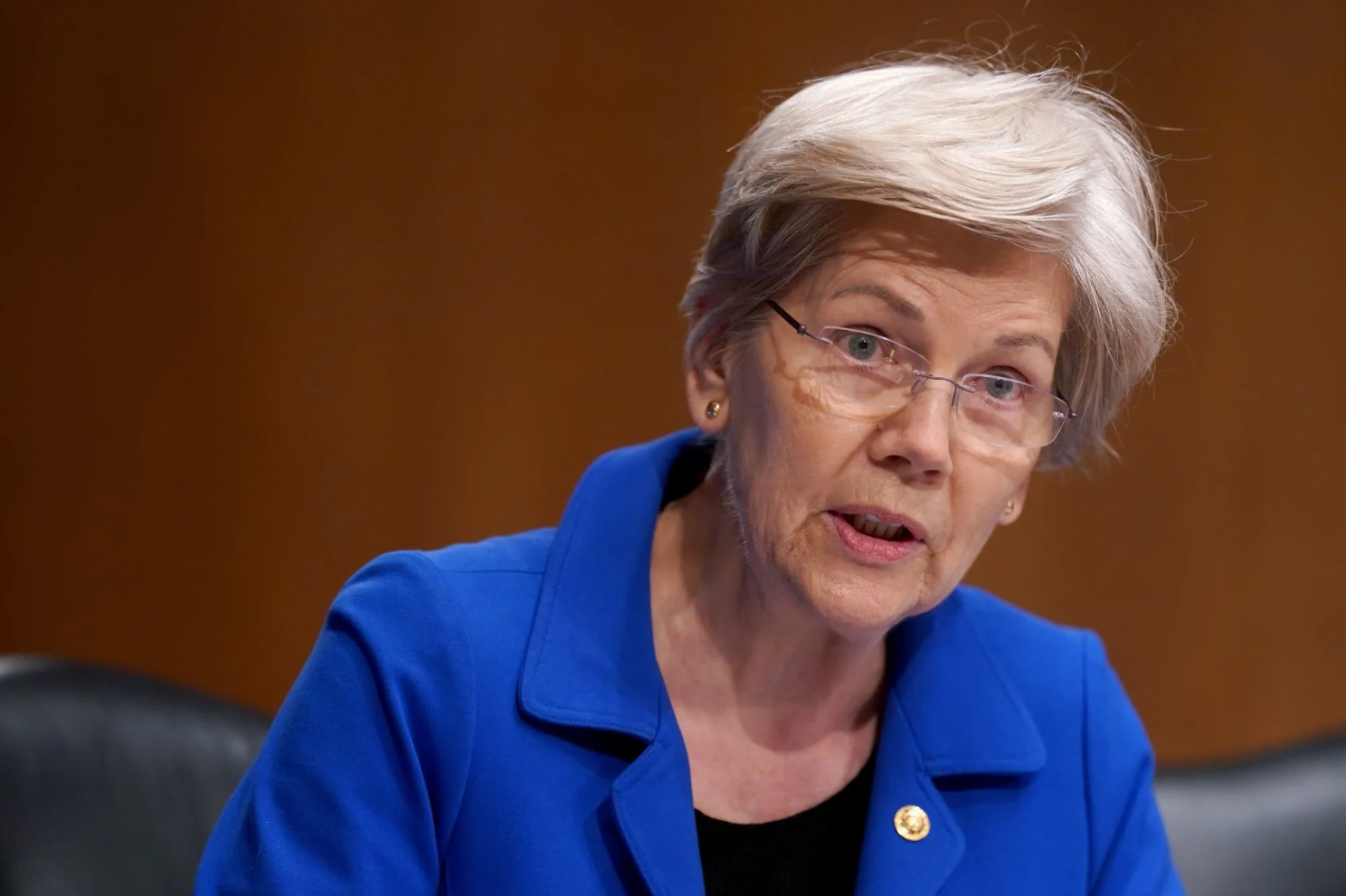
The most important bloc is the Senate Democrats. Around six are needed to overcome a filibuster, and their concerns carry real weight. National security risks, illicit finance, and political dynamics all shape their stance. There’s also little incentive to hand the administration an easy legislative win.
Why it matters: CLARITY doesn’t pass without Democratic support. And right now, that support is conditional at best.
4. The clock is the biggest threat to passage
Even if alignment improves, time is running out.
CLARITY is competing with appropriations, reconciliation bills, foreign policy votes, housing legislation, and a backlog of nominations. After summer recess, midterm campaigning takes over.
Any Senate version must still reconcile across committees and the House. That’s a long path in a short window. If it fails, the outcome isn’t collapse–it’s fragmentation. States like New York and California already regulate aggressively, and others may follow.
Why it matters: This is as much a scheduling problem as a political one.
5. Passage would reset the global picture
The U.S. has had a regulatory footing for digital assets longer than many assume. The Financial Crimes Enforcement Network (FinCEN) has issued guidance since 2013, and institutional adoption is accelerating. Firms like Franklin Templeton, Morgan Stanley, Apollo, and BlackRock are already expanding into digital assets.

Without CLARITY, capital continues to flow into the United States, but with more friction and uncertainty. With CLARITY, however, that changes: it will unlock large-scale tokenization, bring trillions in assets on-chain, and make the United States the default hub for digital asset development.
Why it matters: The United States doesn’t need CLARITY to compete, but passing it would reset the global competitive landscape.
Closing thoughts
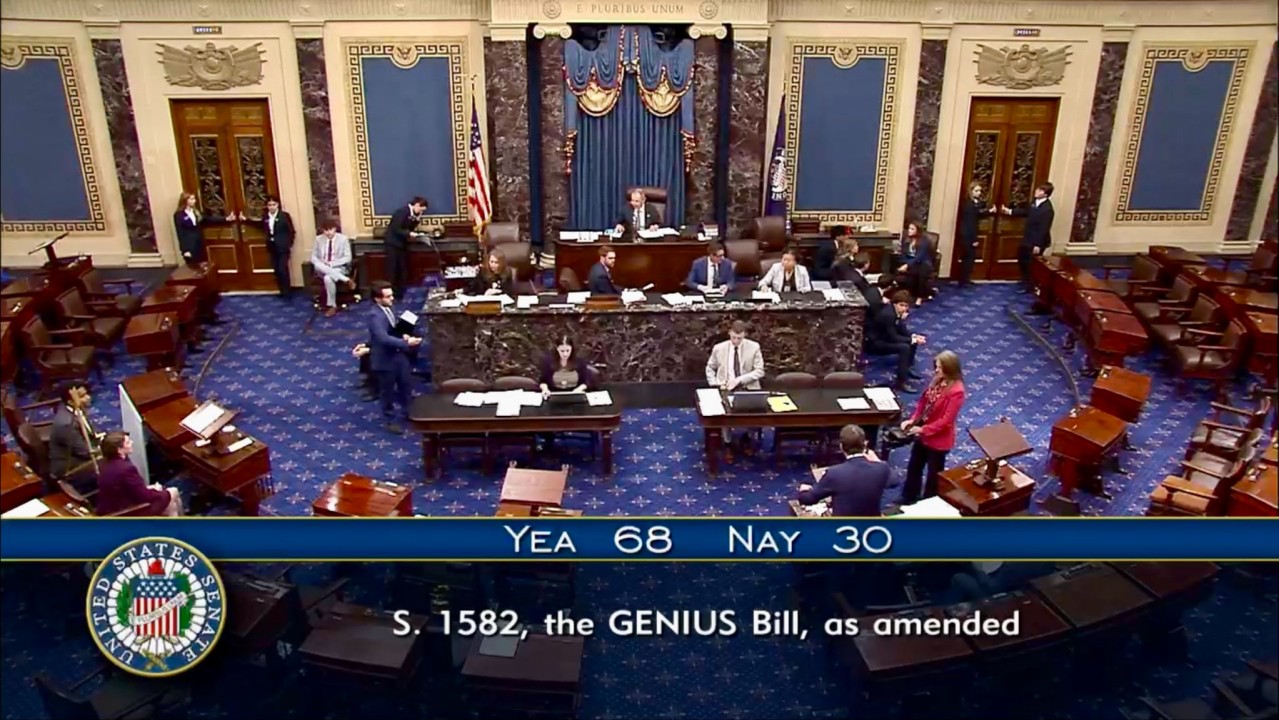
GENIUS showed that bipartisan progress on digital asset legislation is still possible. CLARITY has the potential to do the same, but its path is far more complex and time is not on its side.
As the legislative window narrows, the most likely outcome without action isn’t stasis–it’s fragmentation. Agencies will continue issuing guidance, courts will shape precedent, and states will build their own frameworks.
So the question isn’t whether regulation arrives, it’s whether it arrives as a coherent system or a patchwork shaped by whoever moves first.
Want more like this? Subscribe to Mesh Weekly.



.png)


.png)




.png)
.png)
.png)
.png)

.png)



.png)

.png)




.png)





.png)








%20(1).png)


























.png)
.png)
.png)
.png)
.png)
.png)
.png)
.png)

.png)

