.svg)

.svg)
.png)
July 6, 2026
The World Cup Made Prediction Markets Mainstream. Funding Decides Who Wins.
The 2026 World Cup is the biggest event in the short history of prediction markets — and the numbers don't read like a sports book. They read like a new financial venue coming online.
Start with the customer we know best. The tournament drove Kalshi past $31 billion in trading volume in June — up more than 70% from May — with daily volume holding above $1 billion since the opening match on June 11 and open interest now north of $1 billion. Across the sector, the major platforms cleared close to $50 billion for the month, and Kalshi took roughly two-thirds of it. Its market on the tournament winner alone has drawn more than $800 million, with France the favorite. Investors valued the company at $22 billion this spring, more than four times its October mark.
In late June, Kalshi went further still: it became an official FIFA prediction market partner, through a deal with the tournament's existing partner, ADI Predictstreet. Its brand now runs on the boards around the pitch, on broadcasts, and online. For the category leader, that's a straight play for distribution at the sport's biggest moment — the same prize everyone else is chasing.
Everyone wants in
The clearest signal isn't the volume, it's who showed up to chase it. DraftKings launched its own exchange, DKeX, built on a CFTC-licensed clearing business it acquired last year; its prediction markets vertical is already running near $3.4 billion in annualized consumer volume. Meta is reportedly building a prediction markets app, "Arena," to sit alongside the billions of users on Facebook, Instagram and WhatsApp. And Robinhood went a step past routing contracts through its app: it stood up a dedicated exchange, Rothera, a joint venture with Susquehanna that launched in June and already claims about 7% of U.S. prediction-market volume.
These are distribution machines, and they've each decided prediction markets are worth building for. The category didn't just get bigger this month. It went mainstream, and a mainstream audience arrives expecting to fund in seconds.
Where the race is actually won
When this many platforms chase the same surge of new users, the contest stops being "who has the best odds" and becomes "who can get a first-time user funded during a match."
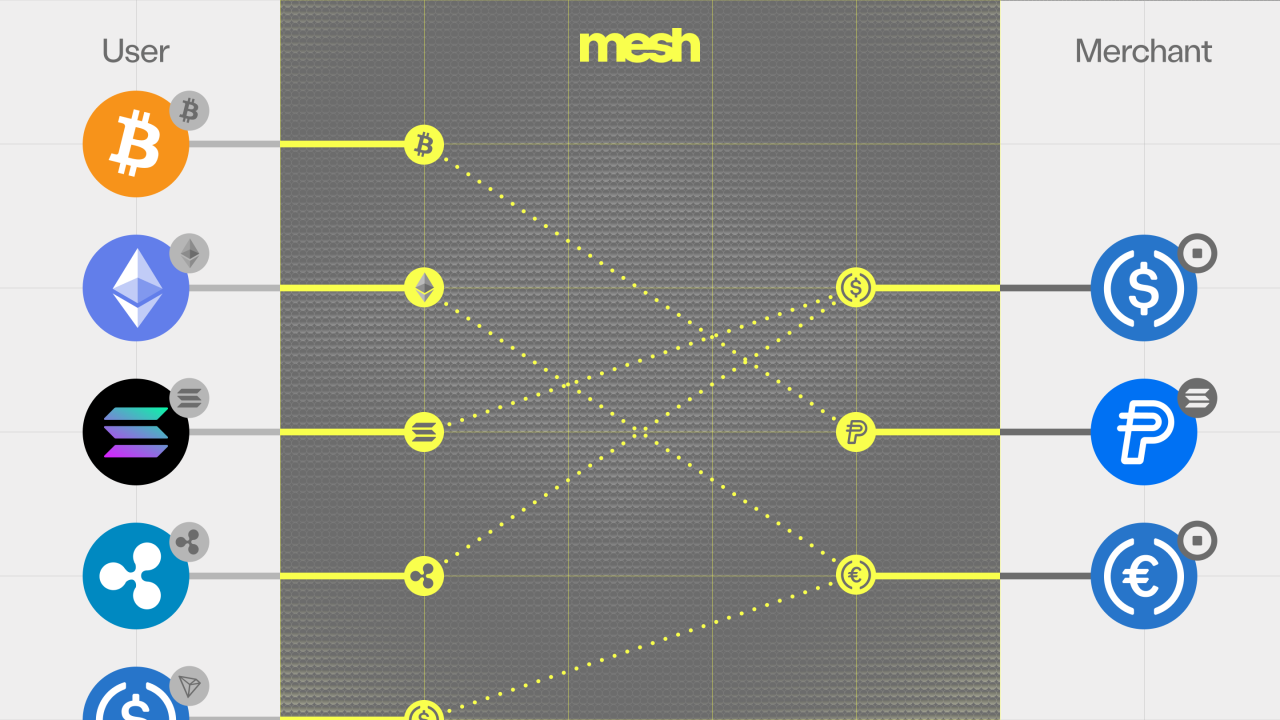
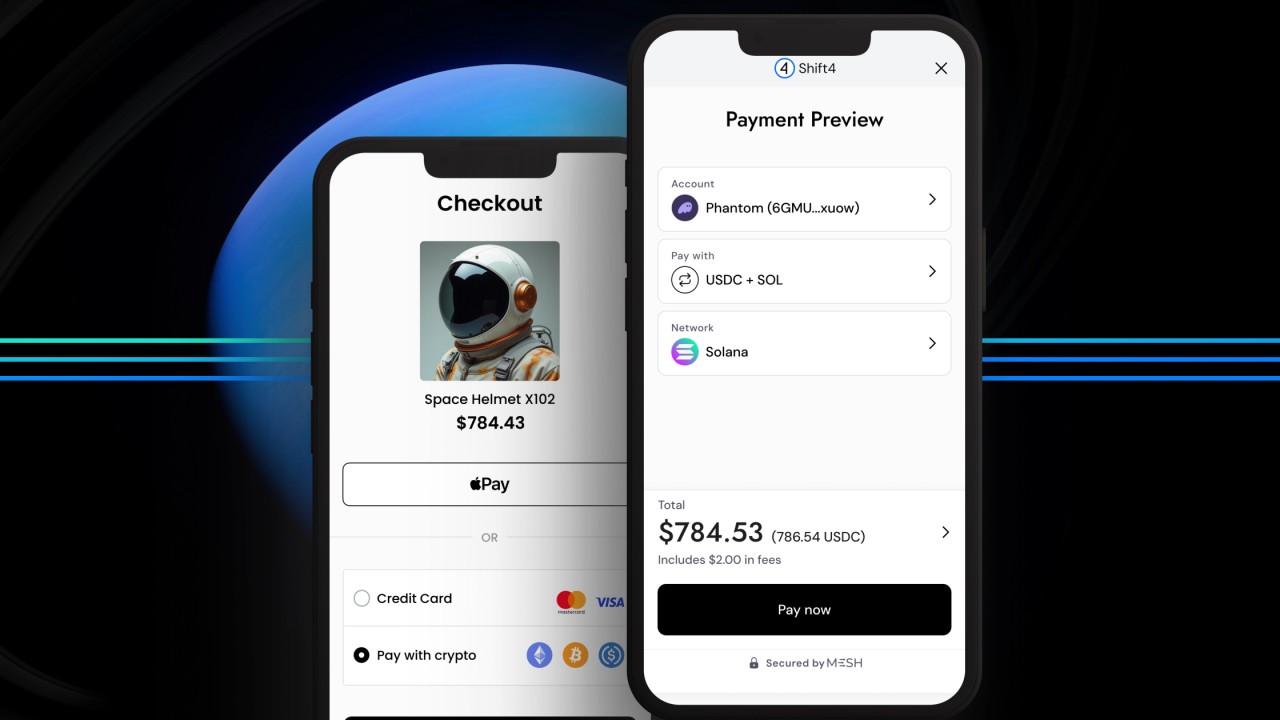
Plenty of that incoming wave want to play with the crypto they already hold — not a card, not a bank transfer. The catch is that their crypto is rarely in the form the platform expects — the wrong token, on the wrong chain, sitting in an exchange or a wallet a few steps removed from where they're trying to fund. The intent is there. The funds are just in the wrong shape.
The platform that converts that user is the one that meets them where their crypto already lives — whatever the asset, wherever they hold it — and routes it in, any-to-any, without making them think about it.
That's the layer Mesh operates: orchestration, not another silo. And as distribution fragments across DraftKings, Rothera, Meta and the incumbents, the funding layer underneath all of them becomes the common denominator. Few have solved it. And because a platform like Kalshi operates under CFTC oversight, the funding layer beneath it has to clear the same compliance bar — which is exactly how we built it. That bar only matters more as the category draws sharper regulatory attention: the same surge minting volume is drawing scrutiny, and compliance-grade rails are fast becoming table stakes.
The proof: Kalshi on Mesh
This isn't theory — it's the mismatch, solved. Here's what Kalshi's deposit flow looks like running on Mesh:
- 1 in 4 deposits funded through SmartFunding™ — Mesh finding users a funding path they'd otherwise have missed
- 88% of users funding from non-native stablecoins — arriving with an asset the platform doesn't natively take, and getting in anyway
A World Cup is the stress test for exactly this. When demand spikes around a match, the question isn't whether users show up — it's whether you can clear the deposit the moment they do.
48 teams, 104 games, 24/7
This is the first World Cup with 48 teams across three host nations, 104 matches instead of 64, spread across every North American time zone. More teams, more markets, more dark-horse outcomes, and round-the-clock trading. With the group stage now settled and the knockout rounds under way, that demand is only concentrating as the field narrows toward the July 19 final.
For platforms, every one of those windows is a funding event. The infrastructure question isn't whether demand arrives. It's whether you can meet it the moment it does.
Building in this space?
The demand is arriving faster than most platforms can fund it. If you're building a prediction market or an iGaming platform, that funding mismatch is the gap between a user who showed up and a deposit that actually cleared — and it's where new audiences are won or lost. Mesh is the any-to-any layer that closes it.
Bring the users. We'll handle the funding.


.png)
.png)
.png)

.png)

.png)
.png)




.png)


%20(1).png)












.png)
.png)
.png)
.png)
.png)
.png)
.png)
.png)

.png)