.svg)

.svg)
July 27, 2026
The Market That Waited Thirty Years for Its Buyers
In 1994, two economists proposed something that sounded like science fiction and read like a spec sheet. Jeffrey MacKie-Mason and Hal Varian — the same Varian who would later become Google's chief economist and help architect the auction engine that funds the modern web — looked at a congested early internet and made a suggestion: let the packets bid.
Their "smart market" (borrowing a term coined a decade earlier in Vernon Smith's experimental economics lab, for auctioning airport landing slots) worked like this: every packet carries a bid field in its header — a number declaring what its sender is willing to pay to send it right now. Your email packets carry a low default bid; nobody minds if a message arrives four seconds late. A live video call bids high. When the network gets congested, it admits the packets whose bids clear the bar, and — here's the elegant part — everyone pays the bid of the marginal packet, the last one that got in. Not their own bid. That single design choice means you have no reason to game it. Bid what the packet is truly worth to you, and the market does the rest: scarce bandwidth flows, minute by minute, to whoever values it most.
Supply meets demand at the level of a single packet. It's one of the cleanest market designs ever put on paper.
The internet rejected it completely.
The most rejected good idea in networking
The failure had nothing to do with the economics. It had two causes, and they're worth separating, because one of them just disappeared.
The first was infrastructural: priority-by-bid required every router to cooperate, which meant changing the already-entrenched IP protocol. The internet chose flat-rate pricing and congestion-by-queueing instead, and we've lived with buffering wheels ever since.
The second was human. People hate micro-auctions. Nobody wants to set a willingness-to-pay on an email. No one wants to think about whether this particular video call merits a premium bid. The cognitive overhead of pricing every action is intolerable to a human being — so we bundle, we flat-rate, we subscribe, and we accept the deadweight loss because the alternative is exhausting. Every subscription you've ever paid for is, in part, a fee you pay to avoid thinking about prices.
The smart market didn't fail because it was wrong. It failed because its ideal participant — a bidder that could evaluate the value of every action, instantly, continuously, without fatigue — didn't exist.
It got built anyway
Skip forward three decades and look at any blockchain fee market. Every transaction carries a bid. Block space is the congested link. When demand spikes, the transactions whose fees clear the bar get included; the rest wait. Ethereum's post-EIP-1559 design even added a protocol-set floor price that adjusts block by block with congestion — dynamic congestion pricing, running in production, securing hundreds of billions of dollars in value.
Read the 1994 paper today and it's uncanny. It describes block inclusion almost verbatim, twenty years before anyone had heard the word "gas." The packets became transactions. The bid field in the header became the priority fee. The smart market wasn't a failed proposal — it was a prophecy filed under the wrong decade.
And notice where it finally worked: in a market where the participants were already software. Wallets set fee bids algorithmically. Nobody hand-prices their transactions; code does it. The moment the bidder stopped being a human, the mechanism humans rejected became the default.
The mechanism was never the problem. The participants were.
The bidders arrive
Which brings us to the present, because the participant the smart market was designed for is now showing up everywhere at once.
An AI agent has none of the human allergy to micro-auctions. Evaluating the value of an action and pricing it accordingly isn't a burden for an agent — it's the job description. And agents don't need occasional access to resources; they need continuous, metered, prioritized access to a very specific list of scarce things: compute and inference capacity. API rate limits. Data feeds. Payment settlement priority. Liquidity. Transaction inclusion on blockchain networks. Every one of those is a congested link. Every one of them is a smart market waiting to happen — and several already are.
Look at what's been built in the last eighteen months. Coinbase's x402 protocol revived HTTP's long-dormant 402 "Payment Required" status code so that an agent requesting a paid resource gets back a price, signs a stablecoin payment, and receives the resource — no account, no API key, no invoice. Per Chainalysis's onchain analysis, it went from near zero to over 100 million cumulative transactions in its first three quarters — and while much of the early surge was speculative noise, the economic weight has shifted fast: transfers over $1 went from 49% of value moved to 95% in a year. A market being rehearsed, and visibly graduating. Google and a sixty-plus-organization coalition shipped AP2, a mandate framework that lets a user cryptographically scope what an agent may spend and on what. OpenAI and Stripe built agentic checkout on single-use, merchant-bound payment tokens. Visa and Mastercard both launched agent-credential programs. Stripe's machine-payments stack settles in stablecoins under the hood.
A clean pattern is already visible in production: consumer-facing agent purchases ride card rails, where disputes and consumer protections live — but machine-to-machine traffic, the agent paying for compute, data, and inference, settles in stablecoins. That split isn't ideology. It's latency math: when the buyer and seller are both software, and the purchase is one of ten thousand an hour, the money has to be programmable, final, and fast enough to live inside the loop.
Varian's market needed a bidder that could price every packet. Thirty years later, the bidders are arriving at a rate of tens of thousands per month, and they're bringing their own settlement rail.
The constraint has moved
For thirty years, the open problem in smart markets was mechanism design: how do you run the auction? That problem is largely solved. Fee markets work. Uniform-price auctions work. HTTP-native payment challenges work. The mechanisms exist and are battle-tested.
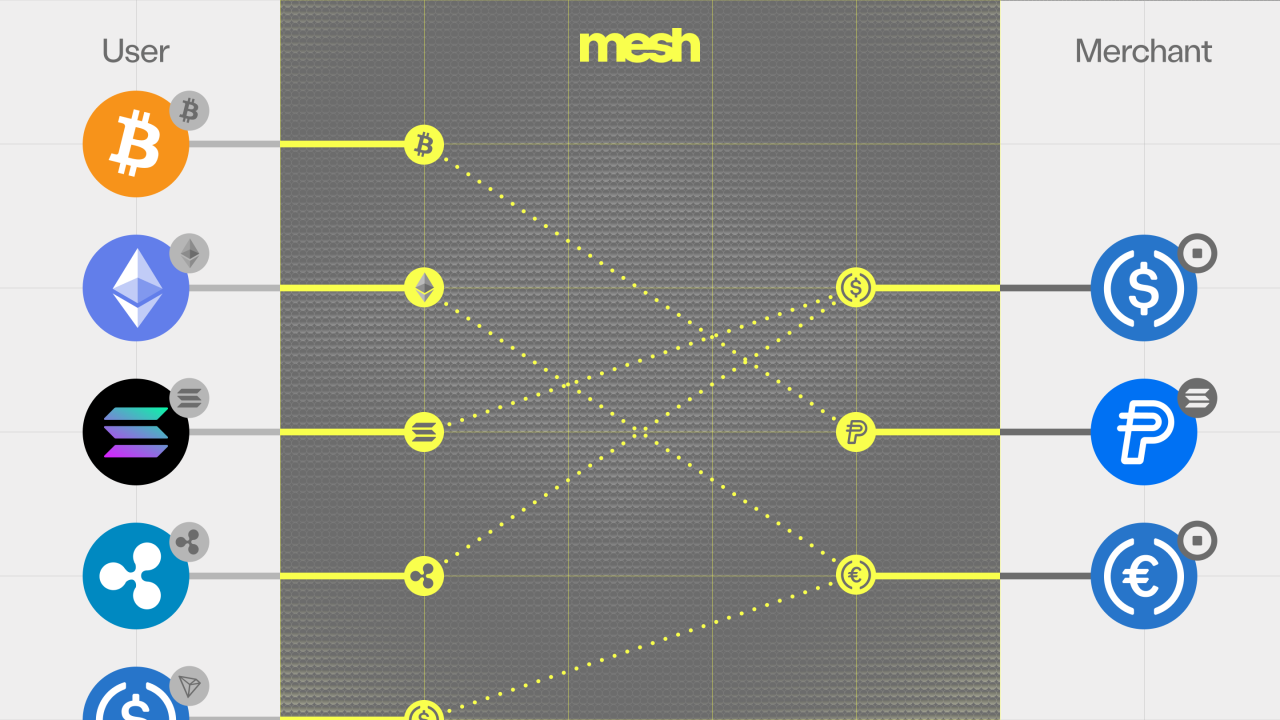
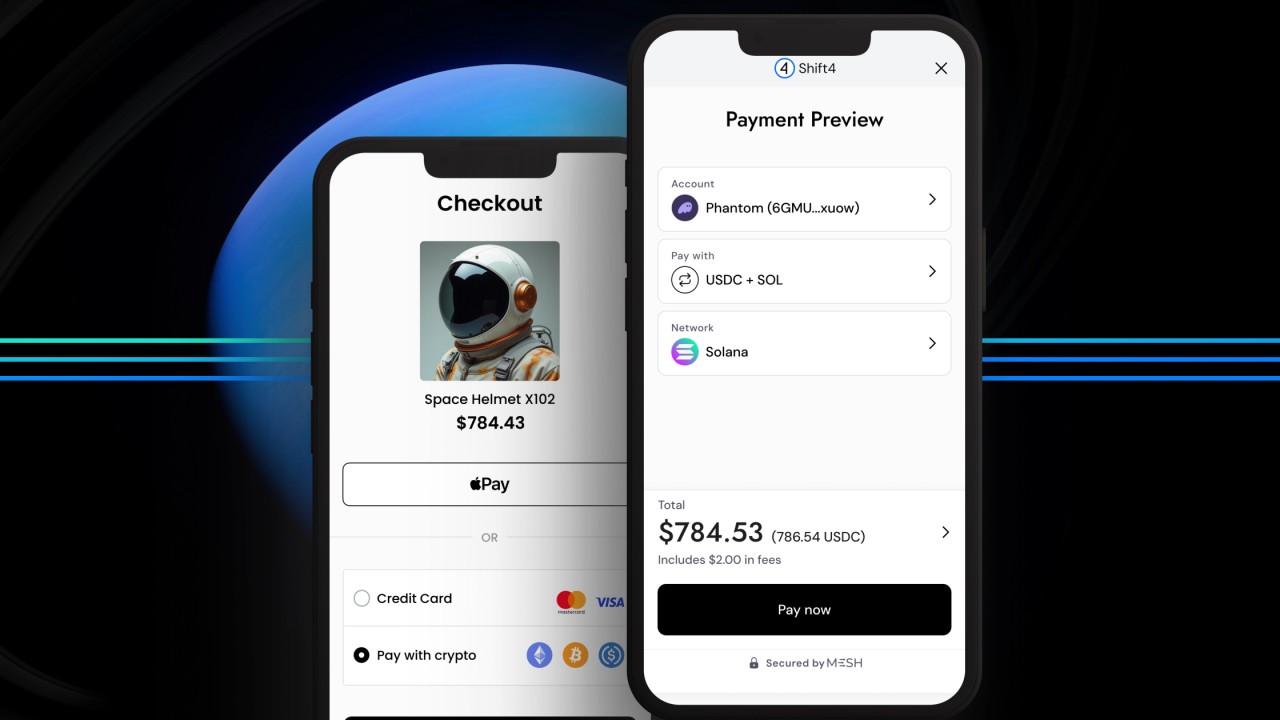
The open problem now is money design. A bid is only as good as the payment behind it. An agent can compute its willingness-to-pay in microseconds, but willingness-to-pay is worthless without ability-to-pay in the form the market clears in — and there is no reason to expect those to match. An agent's principal might hold treasury in USDC on one chain; the inference market it's bidding in might clear in a different stablecoin on a different network; the exchange where it needs settlement priority wants fiat; the blockchain where it needs inclusion wants the native gas asset. Multiply that across every congested resource an agent touches in an hour, and the picture is clear: the agent economy will be a mesh of smart markets, each clearing in its own asset, and the binding constraint is whether value can move between them at the speed of the auction.
An agent that holds the right belief about a resource's value but can't get funds into the right shape before the auction clears is — and regular readers will recognize this — the World Cup trader stuck at the deposit screen, replayed at machine speed, millions of times a day. The intent is ready. The funds are in the wrong shape. Except this time there's no human patience in the loop and no second attempt. The bid just never happens, and the market is a little dumber for it.
Paul Milgrom — the Nobel laureate whose auction theory we wrote about last week — spent a career designing markets and distilled it to one lesson: the most important thing a market designer can do is encourage participation. In agentic markets, participation is funding. The two have fully merged.
What we're building toward
This is the layer Mesh builds in. Any asset, any chain, any account, into exactly the form the destination settles in — we spent years building that any-to-any capability for humans funding accounts, and it turns out to be precisely the treasury primitive an autonomous bidder needs. That's not a pivot. It's the same problem — the deposit screen, with software on both sides.
We don't claim to know the final shape of the agent economy. But we're fairly confident about the direction of the arrow: every scarce digital resource is on its way to being priced by a market, every market is on its way to being bid in by agents, and the winners of that world will be decided the same way markets have always been decided — by who can actually get in.
Varian designed a market and waited thirty years for its buyers. The buyers are here. Now somebody has to make sure their money arrives in time.
Building for agentic transactions? Speak to an expert →
For more on where this is heading, we explore the frontier with the people building it on Tokenized: Agentic Commerce.


.png)

.png)


.png)
.png)
.png)
.png)
.png)

.png)


.png)


.png)


.png)



%20(1).png)
















.png)
.png)
.png)
.png)
.png)
.png)
.png)
.png)

.png)

