.svg)

.svg)
July 26, 2026
How does the answer get into the price?
Spain won the World Cup. If you'd only checked the market once, you'd have gotten it wrong: when we wrote about the tournament three weeks ago, France was the favorite. By the final whistle at MetLife, the market had repriced its way through 104 matches, a French exit in the semis, and a Spain contract that settled at yes — trading as fast as $10 million a minute before the market settled.
That repricing — a market changing its mind in public, in real time — is the thing prediction markets actually sell. One of the deepest questions in economics is how it happens at all. And the answer, it turns out, is also an argument about infrastructure. Start with the theory.
The paradox
Paul Milgrom won the 2020 Nobel Prize for work on auction theory, and he recently sat down with a16z crypto's First Principles podcast to walk through fifty years of it. Early in his career, he ran into a puzzle that economics had mostly waved away: everyone agreed that prices reflect information. Nobody could say how the information got there.
The formal version is the Grossman-Stiglitz paradox. If prices already contain everything the market knows, no trader has any incentive to go gather information — you can just read the price. But if nobody gathers information, the price has nothing to reflect. The market's intelligence, taken to its logical conclusion, argues itself out of existence.
Milgrom's answer, in a 1985 paper with Larry Glosten, is one of those ideas that seems obvious only after someone says it: information enters prices through trades. When someone buys from you, that fact alone tells you something — maybe the asset is worth more than you thought. When someone sells to you, the reverse. Market makers price this in: the gap between bid and ask isn't a handling fee, it's the cost of trading against people who might know something you don't. Every executed trade moves the market's belief a little closer to the truth.
Prediction markets are the theory with the wrapper off
A stock price carries information wrapped around cash flows, buybacks, and vibes. A prediction market contract carries nothing else. "Will Spain win?" has no dividend. The price is the aggregated belief — Glosten-Milgrom running in its purest form, one deposit-funded trade at a time.
The World Cup was the biggest live demonstration yet. Kalshi cleared roughly $27 billion in volume across the tournament and added about 3 million new accounts — double its own projections. The final alone drew $1.89 billion, the winner market topped $1.2 billion (the largest single market in the platform's history), and prediction markets ran at an estimated 27% of legal sportsbook volume. Three million new traders isn't just an audience. In Milgrom's terms, it's three million new sources of information the price didn't have before.
Assuming, of course, that every one of them actually got a deposit through.
The lesson Milgrom keeps repeating
Milgrom didn't just theorize — he designed the FCC spectrum auctions that raised over $100 billion and won him, improbably, an Emmy for reorganizing the television industry. And when he talks about what practice taught him, he keeps landing on the same point: "perhaps the most important thing you can do in auctions is encourage participation."
Make the mechanism too complicated, he says, and people simply don't show up. The FCC incentive auction was one of the hardest computational problems ever embedded in a market — NP-complete graph coloring under 130,000 constraints — and the entire design brief was to make it feel effortless to the person on the other side. A number appears. You say yes or no. Skeptics insisted broadcasters would never participate; then a public TV station sold a channel for $95 million and a religious broadcaster took half a billion. Participation wasn't a marketing problem. It was a design property.
The market only knows what its participants can tell it
Here's where the theory gets uncomfortably practical for anyone running a prediction market.
A price can only aggregate the information of the people who actually get in. Every user who shows up with a belief and fails at the deposit screen isn't just lost revenue — it's a trade that never happened, information that never reached the price.
And the funding failures cluster exactly where the new demand is. Millions of the traders who arrived this summer hold their capital as crypto — the wrong token, on the wrong chain, in an exchange or wallet a few hops from the deposit screen. The belief is ready. The funds are in the wrong shape.
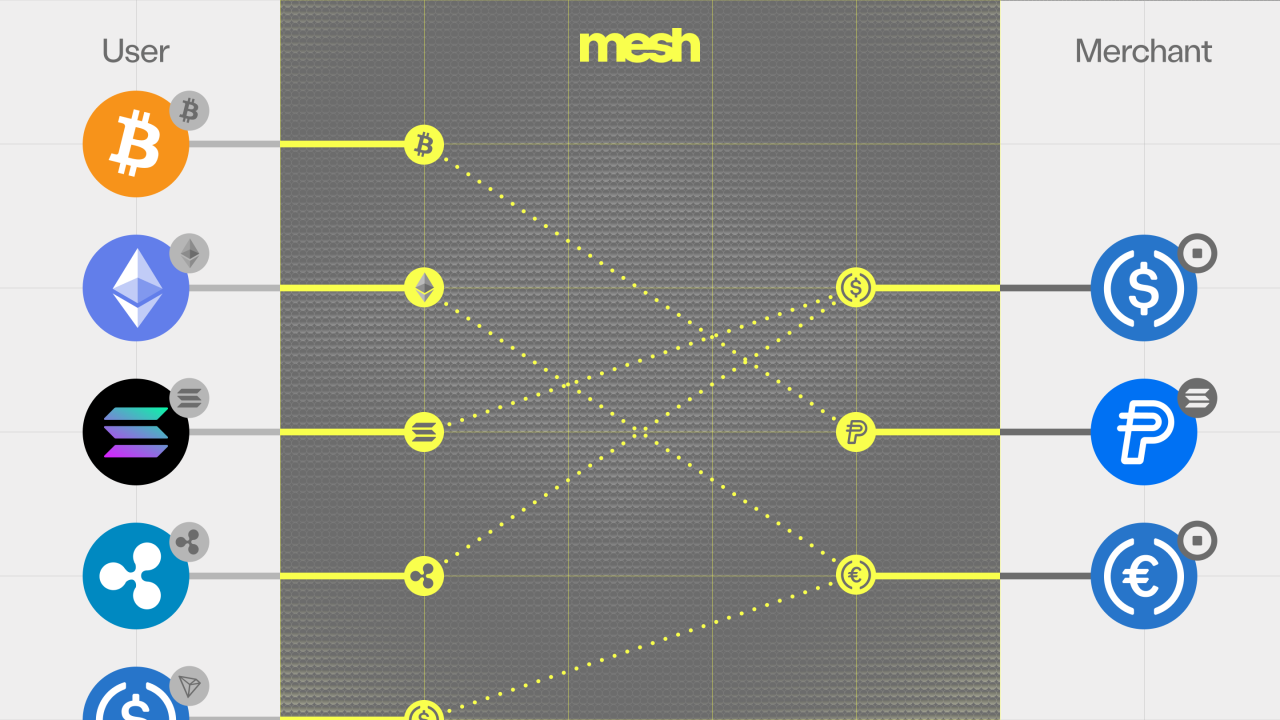
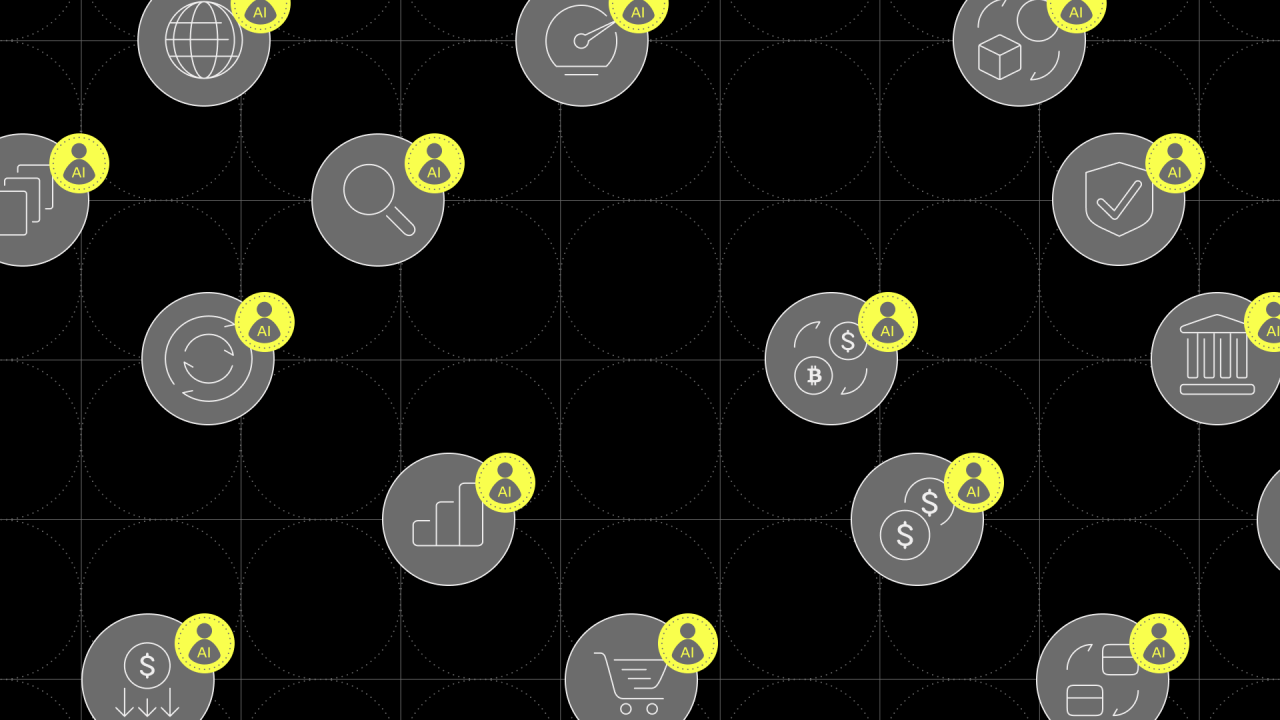
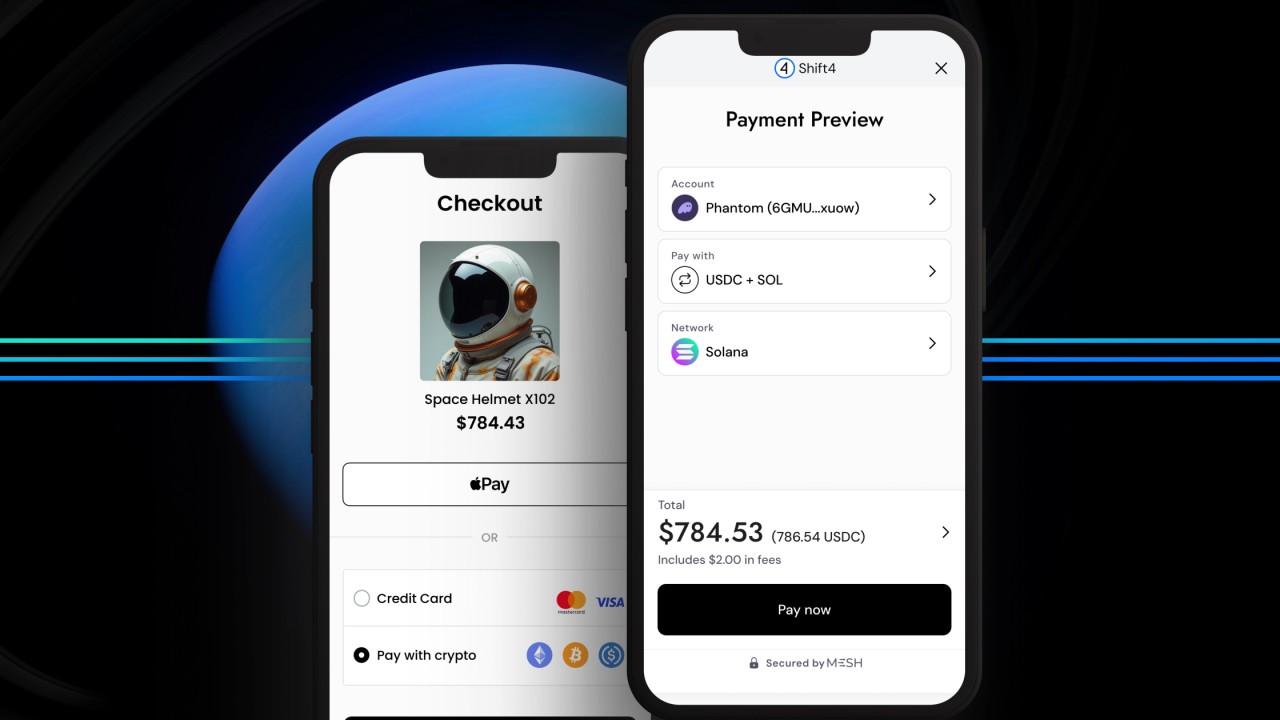
This is the participation layer Mesh runs for platforms like Kalshi. SmartFunding™ finds a path from whatever a user holds — any asset, any chain, any account — to a cleared deposit, arriving in exactly the form the platform settles in. Paths users would otherwise have missed become deposits. Deposits become trades. Trades become a smarter price.
Milgrom designed his auctions so a station owner in Topeka could participate with a yes or a no. The equivalent standard for a prediction market is that a first-time trader can fund from whatever they hold, wherever they hold it, before the moment passes. That's what an orchestration layer is for: any asset, any-to-any, one flow — with the compliance grade a CFTC-regulated venue requires underneath.
Three weeks ago we called the World Cup a distribution story. It was also a price-discovery story — and the two converge on the same lesson a Nobel laureate spent a career proving: the best-designed market is the one that's easiest to enter.
Building a prediction market or iGaming platform? The users are arriving with beliefs and the funds to back them — just not in the form your deposit flow expects. Bring the users. We'll handle the funding. Speak to an expert →
Want more like this? Subscribe to Mesh Weekly.


.png)


.png)

.png)
.png)
.png)
.png)
.png)

.png)


.png)

.png)

.png)



%20(1).png)

















.png)
.png)
.png)
.png)
.png)
.png)
.png)
.png)

.png)

