.svg)

.svg)
.png)
July 27, 2026
How Mesh and Revolut Work Together to Verify Wallets and Power Crypto Deposits
Mesh powers wallet ownership verification and crypto deposits for Revolut's crypto offering, letting the global financial app's customers prove they control their wallets and fund their Revolut accounts with the crypto they already hold — through a single integration that meets the EU Travel Rule's self-hosted wallet requirements while removing the manual steps a crypto deposit historically required. Where verification applies, a deposit enters Revolut from a known, attributable owner, with proof of wallet ownership established before funds move. Revolut integrated Mesh for customers across the European Economic Area, starting with wallet ownership verification (Crowdfund Insider).
Revolut is one of the world's largest consumer financial platforms, serving 75 million customers worldwide (Reuters, June 2026), with a crypto offering that spans trading, transfers, and self-custody connectivity. As European regulation under MiCA and the Transfer of Funds Regulation introduced strict requirements for verifying self-hosted wallet ownership, Revolut needed a way to satisfy those rules at scale without degrading the experience its customers expect. This article explains how the two companies work together, what the integration lets customers do, and how the underlying mechanism works.
What is the Mesh–Revolut partnership?
The Mesh–Revolut partnership is an integration in which Mesh serves as the wallet verification and crypto deposit layer for Revolut's crypto customers, connecting Revolut to the broader digital-asset ecosystem through a single orchestration layer. Announced in December 2024, the partnership began with Revolut integrating Mesh to enhance wallet ownership verification and to achieve compliance with the EU Travel Rule guidelines that took effect for crypto in the European Economic Area, followed by Mesh-powered crypto deposits (Crowdfund Insider).
The two companies' relationship runs deeper than a single integration. QuantumLight — the venture firm founded by Revolut founder and CEO Nik Storonsky — made a strategic investment in Mesh in August 2024 (PRNewswire). "Mesh has clearly identified a critical pain point in the crypto industry, which is fragmentation and a lack of connectivity," Storonsky said at the time. "Their security-first approach, technology, and Bam's strategic vision position them perfectly to continue succeeding in this space" (PRNewswire). Mesh sits as the neutral connectivity layer between Revolut's crypto offering and the world's crypto liquidity: Mesh provides the verification and the connectivity; Revolut receives the assets, and Mesh is never in the flow of funds.
What does the integration let Revolut customers do?
The integration lets a Revolut customer prove ownership of a self-hosted wallet and then fund their Revolut account with the crypto they already hold, without the manual friction those steps used to involve. On the compliance side, when a customer funds their Revolut account from a self-hosted wallet, Mesh confirms that the customer actually controls that wallet — a requirement under the EU Travel Rule for transfers involving self-hosted wallets. On the funding side, Revolut's Direct deposits feature lets a customer make a crypto deposit straight from the Crypto section of the app by linking their wallet through Mesh (Revolut Help Centre).
For the customer, that means no more copying wallet addresses by hand, switching between external tools, or completing the multi-step verification the process historically required. The customer connects the wallet or exchange they already use — confirming ownership where the rules require it — and the deposit completes inside the Revolut experience they already trust. Revolut keeps full control of its interface throughout — Mesh handles the verification and connectivity in the background.
How does Mesh verify wallet ownership for Revolut?
Mesh verifies ownership before funds move, with a method suited to where the crypto is held. For self-hosted wallets, the customer approves a one-time signature request from the wallet they're connecting; because only the wallet's holder can approve it, the signature is proof of control — confirmed automatically, with no manual review and no private key ever exposed (Mesh). For exchange accounts, ownership is established through the customer's authenticated connection to their exchange, which also supports the account-holder information transfers involving exchanges require under the Travel Rule.
This is the mechanism that satisfies the self-hosted wallet ownership requirement at the heart of the EU Travel Rule. Under MiCA and the Transfer of Funds Regulation, crypto-asset service providers operating in the European Economic Area must verify that a customer owns or controls a self-hosted wallet before processing certain transfers — a rule designed to bring crypto transfers in line with the originator and beneficiary information standards long applied in traditional finance (Mesh Travel Rule explainer). For a platform the size of Revolut, doing this manually would mean dedicating support agents to verifying ownership case by case; the signature-based approach turns that into an automated step the customer barely notices. The outcome is that a verified deposit reaches Revolut from a known, attributable owner — with proof of wallet ownership and an auditable trail established before the funds move, not reconstructed after they land.
A defining feature of the verification is that it works consistently across blockchain architectures rather than only EVM chains. It supports EVM-compatible networks such as Ethereum and Polygon, UTXO-based chains including Bitcoin, and Solana — letting Revolut apply one verification approach across the chains it supports instead of stitching together separate processes per chain. Coverage of UTXO-based assets such as Bitcoin is enabled through Mesh's infrastructure together with its verification partners (Crowdfund Insider).
How does Mesh power Revolut's crypto deposits?
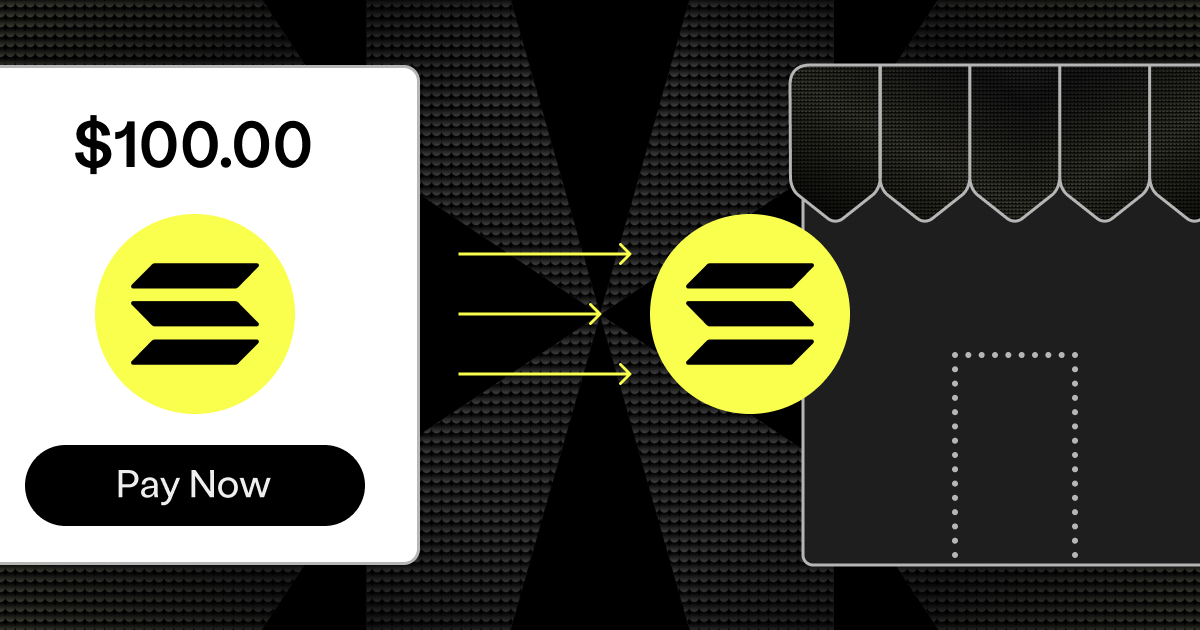
Mesh powers Revolut's crypto deposits by acting as an instruction and orchestration layer: it connects a customer's existing wallets and exchange accounts and relays the transfer instructions the customer authorizes, so the deposit moves from the customer's connected source into their Revolut account. Rather than generating an address for the customer to copy and paste — the step where funds are most often sent to the wrong place and lost permanently — Revolut's Direct deposits feature lets the customer link a wallet through Mesh and fund their account from within the app (Revolut Help Centre).
Verification and deposits are two complementary capabilities Mesh provides. Where the EU Travel Rule requires it — when a customer funds from a self-hosted wallet — Mesh confirms wallet ownership before that transfer proceeds; the same connectivity also powers the deposit experience itself. Not every deposit triggers a self-hosted wallet ownership check, so the verification step applies where the rule calls for it. You can read a fuller breakdown of how Mesh deposits work on the Mesh deposit solutions page, and how SmartFunding routes a deposit for the engine behind Mesh's any-to-any deposit routing.
Which assets, chains, and wallets does it support?
The integration draws on Mesh's network of 300+ wallets and exchanges, 120+ tokens, and 24+ networks through a single integration, as of June 2026 (per meshpay.com). On the verification side, coverage spans EVM chains (such as Ethereum and Polygon), UTXO chains (such as Bitcoin), and Solana, so a single verification method applies across Revolut's crypto offering. On the deposit side, available assets vary by source: certain assets, including Bitcoin, are deposited from exchange accounts rather than self-hosted wallets — a reflection of how UTXO-based chains handle wallet signing across the industry, not a limitation specific to any one platform.
The partnership serves Revolut customers across the European Economic Area — where the EU Travel Rule applies (Crowdfund Insider) — and is also live for Revolut customers in the United Kingdom and Switzerland (per Mesh, as of July 2026).
What results has the integration produced?
Revolut implemented Mesh to meet the EU Travel Rule's self-hosted wallet requirements for its European Economic Area customers, replacing what would otherwise have been a manual, agent-driven verification process with an automated, signature-based verification step (Crowdfund Insider). Its crypto customers can now make deposits by linking a wallet through Mesh directly from the app (Revolut Help Centre).
As Mazen ElJundi, Global Business Head of Crypto at Revolut, put it when the partnership was announced: "We take a compliance-first approach to everything we do when it comes to crypto. Our customers' security is at the heart of our decision making and product strategy at Revolut. In partnering with Mesh, we will greatly enhance our crypto remittances user experience for our customers, while maintaining security and regulatory compliance" (Crowdfund Insider).
Why does the partnership matter for regulated crypto?
Regulated financial platforms are bringing crypto to mainstream audiences, and the verification and funding rails underneath them have become the constraint on how fast they can do it compliantly. The EU Travel Rule made self-hosted wallet ownership verification a hard requirement for crypto-asset service providers in the European Economic Area, and the platforms that can satisfy it without adding friction are the ones that keep customers moving from intent to completed transaction (Mesh Travel Rule explainer).
There is a structural reason attribution matters here. A platform can't properly credit what it can't attribute: crypto arriving from an address no one can tie to a customer isn't cleanly a deposit — it's unknown provenance, manual review, and the risk of freezing or unwinding funds after they land. Verified deposits address that at the source, before funds move rather than after.
Revolut's trajectory makes the stakes concrete: the company secured a MiCA license from Cypriot regulators in 2025 to continue and expand its crypto services across the EU, and a full UK banking license in March 2026 (CoinDesk). Mesh's integration powers Revolut's crypto offering — the wallet verification and crypto deposit experience — not Revolut's banking products. For a crypto offering operating at that scale, network-layer infrastructure that verifies wallet ownership and powers deposits across every chain a customer might use — rather than bespoke, per-chain connectivity built in-house — is the practical way to meet compliance obligations and reach crypto liquidity at the same time. That is the gap Mesh closes.
Partnership history
Mesh and Revolut announced the partnership in December 2024, framed around Revolut integrating Mesh to enhance wallet ownership verification and meet the EU Travel Rule guidelines taking effect in the European Economic Area, with Mesh-powered crypto deposits to follow (Crowdfund Insider; Mesh on LinkedIn). The integration built on QuantumLight's August 2024 strategic investment in Mesh — the venture firm founded by Revolut's Nik Storonsky (PRNewswire). Mesh went on to raise an $82 million Series B in March 2025 (Payments Dive) and a $75 million Series C at a $1 billion valuation in January 2026, led by Dragonfly with Coinbase Ventures and Paradigm participating (Bloomberg; Decrypt).
Frequently asked questions
→ What is the Mesh–Revolut partnership? It is an integration in which Mesh provides wallet ownership verification and crypto deposit connectivity for Revolut's crypto customers. Revolut integrated Mesh to meet the EU Travel Rule's self-hosted wallet requirements, and customers can fund their accounts with crypto by linking a wallet through Mesh (Crowdfund Insider; Revolut Help Centre).
→ How does Mesh verify ownership? For self-hosted wallets, the customer approves a one-time signature request from their wallet — proof of control, confirmed automatically without manual review and without exposing the private key (Mesh). For exchange accounts, ownership is established through the customer's authenticated connection to the exchange.
→ Why does Revolut need wallet ownership verification? Under MiCA and the Transfer of Funds Regulation, crypto-asset service providers in the European Economic Area must verify ownership of self-hosted wallets for certain transfers under the EU Travel Rule. Mesh automates that requirement (Mesh Travel Rule explainer).
→ How do I deposit crypto into Revolut? Through Revolut's Direct deposits feature, you make a crypto deposit from the Crypto section of the app by linking your wallet through Mesh (Revolut Help Centre).
→ Which chains does the verification support? EVM-compatible chains such as Ethereum and Polygon, UTXO chains such as Bitcoin, and Solana — one verification method across Revolut's multi-chain crypto offering (Crowdfund Insider).
→ Is crypto funding available everywhere? The integration serves Revolut customers across the European Economic Area — where the EU Travel Rule applies — and is also live in the United Kingdom and Switzerland as of July 2026. Availability of specific assets and funding methods varies by source and jurisdiction. This article is informational and is not financial or legal advice.
Related reading
- Verified deposits and wallet ownership verification, explained
- Mesh wallet verification, explained
- The Travel Rule, explained for crypto and stablecoins
- Instant crypto deposits from wallets and exchanges
- How SmartFunding works
- Crypto wallet identity verification: how it works
- Why AML/KYC is broken, and how crypto can fix it
- Revolut customer story: frictionless verified deposits



.png)

.png)




.png)
.png)
.png)
.png)

.png)



.png)


.png)



.png)




.png)






%20(1).png)


























.png)
.png)
.png)
.png)
.png)
.png)
.png)
.png)

.png)

